Product : Daitron Low Noise Power Supply – No. 3
Why Does Noise Suppression Become a “Whack-a-Mole” Game?
The Limits of Noise Filtering and the Importance of Power Supply Design
Introduction
Adding inductors and capacitors is one of the most widely used approaches to suppressing power supply noise.
However, in practice, the following issues are often encountered:
• Noise persists even after countermeasures have been implemented
• New sources of noise emerge elsewhere
Side Effects of Inductor-Based Countermeasures
By adding inductors or ferrite beads to power lines, high-frequency noise can be effectively reduced.
However, these countermeasures can also introduce unintended side effects, including:
• Ground potential fluctuations (ground bounce)
• Generation of common-mode noise
• Increased radiated emissions
As differential-mode noise is suppressed, common-mode noise may emerge.
Side Effects of Capacitor-Based Countermeasures
Capacitors are often added to reduce differential-mode noise by providing a low-impedance path to ground.
However, this approach can also introduce unintended consequences.
The following factors can cause differential-mode noise to be converted into common-mode noise:
• Increased ground impedance
• Increased parasitic capacitance
• Changes in current loop
Furthermore, additional issues such as the following may be introduced:
• Increased inrush current
• Startup delays
Understanding the “Whack-a-Mole” Effect
A common feature of these phenomena is that noise does not simply disappear. Instead, it changes form and reappears.
Examples include:
・Differential-mode (DM) noise → Common-mode (CM) noise
・Localized noise → Radiated noise
・Suppression of one issue → Emergence of another
Eliminating noise at one point often causes it to surface elsewhere.
This is why noise suppression is frequently described as a “whack-a-mole” phenomenon.
The Limits of Symptomatic Noise Countermeasures
Filter-based countermeasures using inductors and capacitors are essentially reactive measures that address noise after it has already been generated.
However, if the source of the noise remains unchanged, engineers can become trapped in a cycle of:
Countermeasure → Side Effect → Additional Countermeasure
without achieving a fundamental solution.
The Key to Solving Noise Issues: Minimizing Noise at the Source
To fundamentally solve this challenge, it is important to focus not on removing noise, but on preventing it from being generated in the first place.
An Alternative Approach: Low-Noise Power Supplies
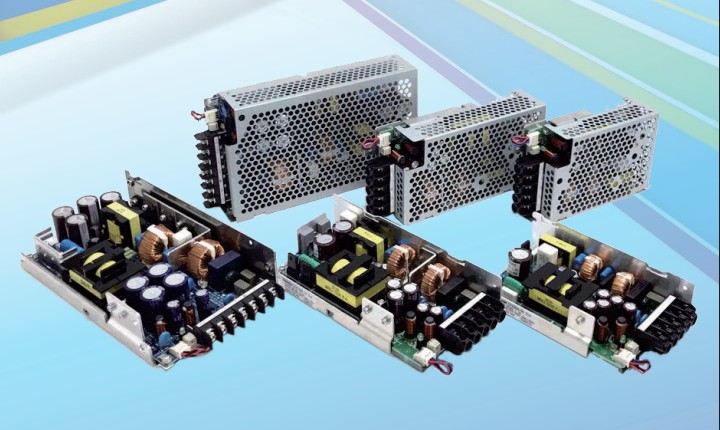
Daitron’s ultra-low-noise switching power supplies are designed to minimize noise generation at the source.
Key features include:
・Ripple noise as low as 1 mVp-p (RFS50A)
・Compliance with medical standards (LFS Series and PFS300A)
・Low leakage current design
Rather than relying solely on external filtering components, these features help minimize noise generation at its source.
As a result, they offer:
・Reduced reliance on noise filters
・Simplified system design
・A more fundamental solution to noise issue
Conclusion
What is important in noise control is not “How do we remove noise?”, but rather “How do we prevent it from being generated in the first place?”
Inductors and capacitors are effective tools for noise suppression. However, relying solely on filter-based countermeasures cannot fundamentally solve noise issues.
Ultimately, the most effective noise countermeasure is a power supply design that minimizes noise generation at the source.